
Artificial recharge of groundwater
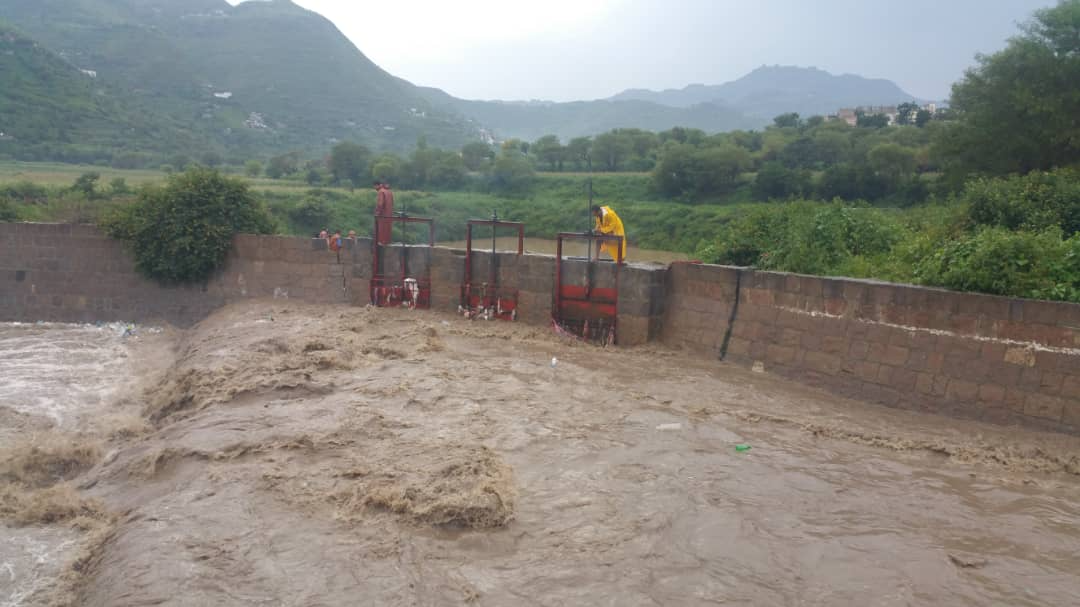
In response to severe water scarcity and falling water tables in shallow groundwater basins in the Yemeni highlands, some water utilities have initiated artificial recharge to enhance groundwater availability for domestic water supply. Ibb LC has developed a comprehensive plan for groundwater recharge of the aquifers in the area of their boreholes. Staff prepared a detailed map and determined 15 possible sites to construct ponds to collect rainwater and recharge the water basin in Ibb and Jeblah with a total capacity of over one million m3. Implementation of this plan has started with the construction of one pond in the Ibb basin and two in the Jeblah basin.
Description of the problem
Ibb governorate suffered from a stifling water crisis with the increased water demand following the arrival of hundreds of thousands of internally displaced persons from nearby governorates. This aggravated the situation in the water scarce Ibb and Jeblah basins in the Yemeni central mountains, with water levels dropping over four meters per year. The Ibb water utility searched for new or supplementary water resources, but these were not available as the water basins are small and shallow, leaving as only feasible option to improve available water resources.
Description of the good practice
This practice concerns the construction of artificial ponds to recharge the available groundwater resources to ensure the sustainability of water supply provision. The process included:
- Analysis of rainwater data, preparation of a detailed area maps, and the identification of 15 potential sites for artificial recharge both in urban and rural areas (Figure 27)
- Construction of three ponds one in Ibb and two in Jeblah, to collect rainwater and recharge groundwater with a total capacity of 100,000 m3 (Figure 28).
- Construction of trenches of to recharge the groundwater. Trenches are 500 meters in length and 3-6 meters in depth and vary in width (Figure 29).
Impact and sustainability of the good practice
After the construction and filling of the recharge ponds during the rainy season, a rise in groundwater level was observed in all wells in the region, including the wells of the utility. This enabled the utility to increase the production of several of their wells and resume the use of others. The increased production allowed the utility to sell more water, thus increasing its revenues and improving its services.
Long term rainfall data show that the practice is sustainable as even in dryer years, sufficient rainwater can be harvested in the ponds.
Required resources
Figure 27 Proposed locations of recharge ponds in Ibb and Jeblah, nearby the borehole fields
The required resources include:
- A team that can make a detailed assessment of the groundwater and surface water situation with access to proper rainwater data and a good map of the area.
- Available space in the landscape to construct ponds or trenches for rainwater collection and soil conditions that facilitate water infiltration.
- Financial resources to obtain the area and construct and fence the ponds
- Regular monitoring of the water levels in the wells to follow the effect of the water recharge and to determine proper water abstraction levels.
- Monitoring water quality in the wells as well as in the recharge ponds themselves.
Figure 28 Example designs for some artificial ponds and trenches
Figure 29 Ponds during construction and operation


